How to Dress Petite: Proportion, Not Just Heels
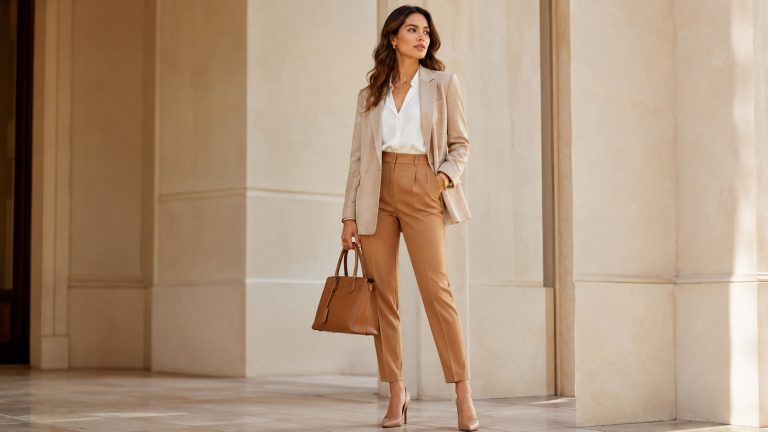
Dressing petite to look taller comes down to one uninterrupted vertical line and a horizontal break placed high. A high waistband, a tucked or cropped top, one color from shoulder to shoe, and a hem that ends where you meant it will lengthen how an outfit reads more than heels will. The more useful reframe is this: petite is a garment construction problem, not a height problem. Standard clothes place the shoulder seam, armhole, waist seam and knee break at fixed distances, and on a shorter frame those points land in the wrong places. Fix where the seams land and most of the styling advice becomes optional.
What “petite” actually means
Petite is a retail cut, not a description of you. Petite lines are graded with a shorter overall length: shorter sleeves, a higher waist seam, a shallower armhole, a shorter rise, and shorter hems, on the same range of widths as the regular line. The height threshold that qualifies is set by each brand rather than by any standard, and the figure commonly cited in US retail sits around the five foot four mark, so it varies from label to label.
Two things follow that most articles never say.
Petite is about proportion, not size. Petite sizing exists across the whole size range, and being petite says nothing about your width. If a page conflates the two, it is not going to be much use to you.
“Looking taller” is optional. It is the goal the genre assumes, and it is a preference. The mechanics below work as levers for whatever you want: a long uninterrupted line, or a deliberately broken one. Nothing here is a correction.
Where standard garments go wrong, in order
This is the diagnostic that replaces most of the tip lists. Try a garment and check these points in this order.
- The shoulder seam. It should sit at the outer edge of your shoulder. On a shorter frame, standard shoulders often extend down the arm, which drops the whole garment and makes it read borrowed.
- The armhole. A deep armhole restricts movement and adds fabric under the arm. It is also the alteration nobody can do affordably, so it is the strongest reason to buy a petite cut when one exists.
- The waist seam. A waist seam sitting below your natural waist is the single most common source of the feeling that a dress “is not working”. It shortens the leg section and lengthens the torso at the same time.
- The rise. A rise cut for a longer torso puts the waistband low and the crotch seam lower, which shortens the leg read. Also effectively unalterable.
- The knee break. Pants and skirt hems are cut to land at a specific point on a standard leg. On a shorter leg they land lower, which is why a midi becomes a maxi and a cropped pant becomes a full-length one.
- Sleeve length. Easy to fix, worth fixing, and one of the most visible when it is wrong.

Which alterations are worth doing
Ranked by cost and difficulty, which is the ranking that matters when your budget is finite.
| Alteration | Difficulty | Worth it |
|---|---|---|
| Hem shortened (pants, skirt, dress) | Simple | Almost always. The highest impact change available |
| Sleeve shortened | Simple to moderate | Yes on anything unlined; more work on a lined jacket with buttons |
| Straps shortened | Simple | Yes, and it moves a bodice up to where it belongs |
| Waist taken in | Moderate | Yes on bottoms that fit at the hip |
| Waist seam raised on a dress | Complex | Rarely worth it; buy a different cut instead |
| Shoulder narrowed | Complex | Usually not, except on a garment you love |
| Armhole raised, rise changed | Impractical | No. Buy the petite cut instead |
The honest summary: hems and sleeves buy you most of the improvement, and the two things you cannot fix, the armhole and the rise, are the reason petite ranges exist at all.

The mechanics that lengthen a line
Every one of these is a lever, and all of them are reversible.
One color, top to toe. A single color family creates an unbroken vertical line with nothing stopping the eye. It is the strongest elongating tool available and it costs nothing. Shoes close to the color of the hem or the leg extend that line further.
Break high. A waistband or a tuck placed at your natural waist or above gives you a short upper section and a long lower one. A long untucked top over pants does the opposite. The front tuck does this in seconds and is easy to undo.
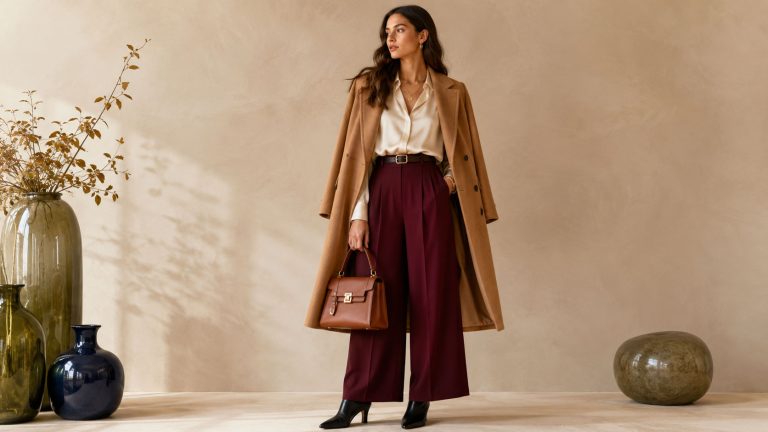
Fewer horizontal stops. Belts in a contrasting color, ankle straps, contrasting hems, and layered pieces that each show an edge all divide the body into shorter sections. Reduce the count and the same outfit reads longer. The general principle is in balancing proportions in an outfit.
Vertical detail. A long open cardigan or jacket, a center front placket, a V or scoop neckline, a straight column of buttons. All of them lead the eye up and down rather than across.
Scale of details. A collar, a print, a bag or a heel that is large relative to your frame becomes the main event. This is not a rule against big pieces; it is a reason to choose deliberately which big piece you want to be the focal point. Our guide to styling an oversized blazer when you are petite works this through on the hardest example.

Hem lengths, honestly
The advice that petites cannot wear midi or maxi lengths is not a height rule, it is a landing-point rule. A hem that ends at the widest part of the calf gives a hard stop at the shortest, widest part of the leg. The same skirt hemmed a couple of inches shorter, or worn with a boot that continues the line, reads completely differently.
- Above the knee to just at it: the most leg visible, the fewest complications.
- Midi: works when the hem clears the calf or the shoe continues the line. This is the length most improved by a hem alteration, and our midi skirt guide covers the shoe pairing in detail.
- Maxi: works when it just clears the floor in the shoe you plan to wear, and reads as one continuous column when it matches the top.
- Cropped pants: the cropped point on a standard cut lands lower on a shorter leg, which is why they often read as an accidental length rather than a chosen one.
Boots make this trickier because the shaft adds a second stop. The interaction between hem and shaft is covered in what to wear with knee-high boots.

Do heels matter?
They add height, and they change nothing about proportion. A heel under a low waistband and a long untucked top still gives you a short leg section. A flat shoe under a high waistband and a tucked top gives you a long one. Between the two, the second reads longer.
If you like heels, a shoe close to the color of your leg or hem extends the line further than a contrasting one, and a pointed toe adds a little length to the visual line of the foot. If you do not like heels, nothing in this article requires them.

The part the genre gets wrong
Petite advice slides constantly into instructions to look as tall as possible, as though height were a target. It is not. Some of the best-composed outfits on a short frame are deliberately broken: a cropped jacket with a full midi, a strong horizontal stripe, a contrasting boot. They work because the proportions are chosen rather than accidental.
Body categories are a retail shorthand, not a taxonomy, and height cuts across all of them. Someone petite with a pear ratio needs both sets of mechanics, and taking half of each is the correct approach rather than a compromise. That layered view is what dressing for your body shape is built around.

FAQ
Does dressing petite mean I have to look taller?
No. Elongating is one available effect and this article treats it as a lever rather than a goal. Plenty of well-composed petite outfits use a deliberate horizontal break because the wearer wanted it there.
What is the single most useful thing I can do?
Hem things. A hem shortened to land where you intend changes an outfit more than any other single action, and it is one of the simplest alterations a tailor performs. Sleeves are the close second.
Can petites wear oversized clothes?
Yes, as long as the outfit keeps one visible narrow point: a rolled sleeve, an exposed ankle, an open neckline, or a tucked waist. Volume with no visible line anywhere is what people mean when they say a garment wore them.
Why do standard sizes never fit even when the width is right?
Because the length grading is separate from the width grading. Shoulder seams, armhole depth, waist seam and rise are cut to a standard vertical distance, and on a shorter frame they land low. The width can be correct while every vertical landmark is wrong.
Are horizontal stripes bad for petites?
No. A horizontal stripe adds a horizontal emphasis, which competes with a long vertical read. If you want the vertical read, skip it that day. If you like the stripe, wear it and put the length back with a high break and a matching shoe.